Home › Asphalt Striping and Pavement Markings
Finish your lot right with professional asphalt striping in Memphis, TN. We layout and paint parking stalls, handicap spaces, fire lanes, and directional arrows so traffic flows safely and your property meets local requirements.
Precision Asphalt Memphis provides professional asphalt striping throughout Memphis, TN, Tennessee and the surrounding area. Our licensed, insured crew delivers safe, clean, on-time work with a free estimate before anything begins. Call (901) 519-3028 or request your free quote.
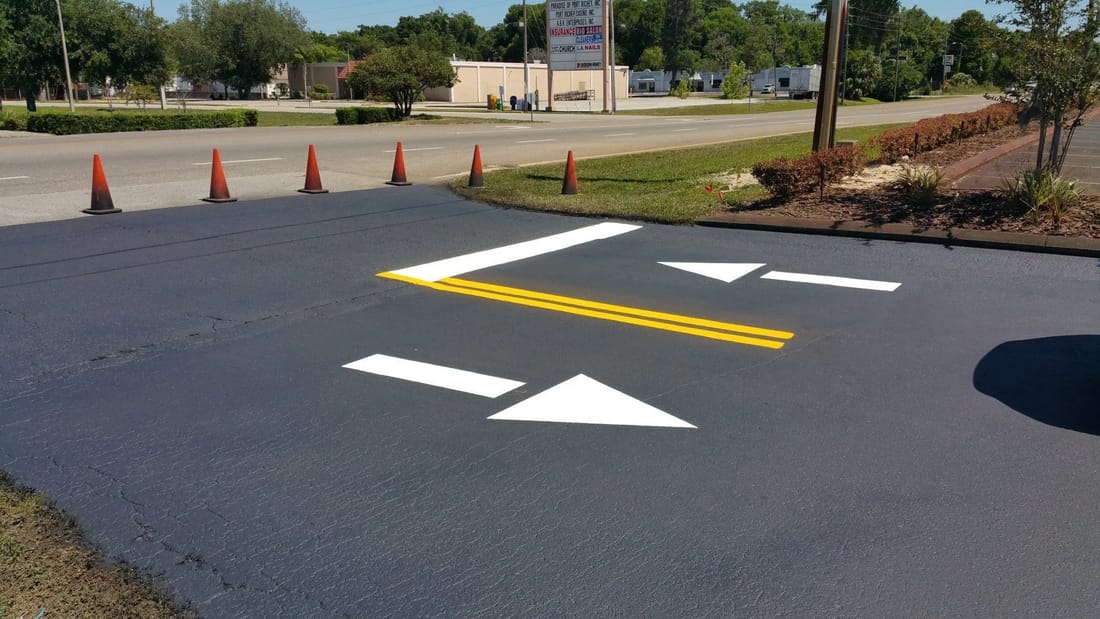
Clear, compliant striping for Memphis properties
If vehicles or pedestrians cross your pavement every day, your markings are not just cosmetic. They control traffic flow, protect people, and keep you in compliance with ADA and local fire code. At Precision Asphalt Memphis, we focus on asphalt striping that is easy to read in the daytime, under parking lot lights, and in wet West Tennessee weather.
We work with commercial centers along Germantown Parkway, medical offices near the Memphis Medical District, churches, schools, and older multifamily properties built in the 60s through 90s. Many of these lots have been restriped again and again without a real plan, which leads to confusing layouts and liability risk. Our crew starts by walking the site with you, reviewing how people actually use your lot, where congestion happens, and where you may have ADA or fire lane issues.
From there, we create a layout that fits your lineal footage, traffic patterns, and city requirements. Whether you are refreshing faded lines after sealcoating or changing the flow around a busy drive-through, Precision Asphalt Memphis treats striping as a safety project, not just a paint job.
How asphalt striping is actually done
Effective asphalt striping and pavement markings follow a predictable process, and understanding it helps you plan around weather and business hours.
1) Surface preparation: We start by cleaning the pavement with high powered blowers, rotary brooms, and wire brushes where needed. In older Midtown and East Memphis lots, dirt and loose aggregate tend to collect in low spots and along curb lines. Any debris or loose sealer is removed so the paint bonds properly.
2) Layout and measurement: Using a 300-foot measuring tape, chalk lines, and laser layout tools, we measure parking bays, drive lanes, and fire lanes. Standard Memphis passenger stalls are typically 9 feet by 18 feet, but we adjust as needed for compact spaces, one-way aisles, or truck parking. We mark ADA access aisles, hash-out zones, and crosswalk widths before any paint is sprayed.
3) Line striping application: For most projects we use a walk-behind airless striping machine loaded with DOT-approved acrylic traffic paint. The machine lays consistent 4-inch or 6-inch lines at a controlled mil thickness. Corners, arrows, and tight areas are cut in with handheld spray guns and pre-cut stencils.
4) Curing and reopening: In Memphis humidity, water-based traffic paint usually becomes dry to the touch in 20 to 60 minutes, depending on temperature, shade, and air flow. We place cones and caution tape to keep vehicles off the fresh lines until the paint is hardened enough to resist tire tracking. For critical entrances, we can phase the project so you always have a way in and out.
5) Final walk-through: Before we remove traffic control, we walk the site with you to confirm stall counts, ADA access, and directional flow. If any stencil or line needs a touch up, we handle it while we are still mobilized on site.
Material and design options that affect durability and cost
Not every lot in Memphis needs the same striping materials. Precision Asphalt Memphis explains the options so you can match durability to your budget and traffic level.
Paint choices: Most retail and office lots use high-solids water-based traffic paint because it is cost effective, low odor, and cures fast in our climate. For heavy traffic drive lanes, busy warehouse yards, or fueling areas, we may recommend chlorinated rubber or solvent-based paints for better chemical resistance and longer life. These cost more but can reduce how often you need restriping.
Color and width: Standard parking lines are white, with yellow used for loading zones and certain fire lanes, and blue for ADA spaces and access aisles. Line width is typically 4 inches for stalls and 6 inches for stop bars and crosswalks. Wider lines use more material and slightly increase cost, but can be worth it where visibility is critical.
Reflectivity and glass beads: If your lot has limited lighting or you operate at night, we can broadcast glass beads into the wet paint to add reflectivity. This option is popular for trucking facilities and industrial sites along the river. It increases upfront cost but improves nighttime visibility significantly.
Layout changes: Reconfiguring the layout to add more stalls, create new drive-through lanes, or accommodate larger delivery trucks involves extra measuring, chalking, and often grinding or blacking out old lines. Those design services and extra labor factor into pricing, but can pay off by increasing usable parking and reducing fender benders.
ADA, fire lane, and local code considerations in Memphis
Parking layouts in Shelby County must meet federal ADA standards, along with any requirements from the City of Memphis or local fire marshal. Precision Asphalt Memphis helps property owners avoid citations and expensive last minute corrections.
ADA compliance: We verify that you have the correct number of accessible spaces based on your total stall count, plus required van accessible spaces. Each ADA stall gets the correct blue symbol stencil, contrasting border, and adjacent striped access aisle, usually 5 feet wide for standard ADA and 8 feet for van accessible. We coordinate with your concrete or asphalt contractor if new ramps or level landing areas are needed.
Signage: Striping alone is not enough. Accessible spaces must be paired with mounted signs at the proper height. We can install or replace posts and signs as part of the project so your markings and signs match.
Fire lanes: Local fire marshals require clear, readable "FIRE LANE NO PARKING" markings at designated curbs or drive lanes. We stencil this wording repeatedly along the curb face or pavement, usually in red with white letters, and ensure the lane width is maintained so emergency vehicles can pass.
Loading zones and delivery areas: For older Memphis commercial buildings, loading dock approaches were not always designed for today’s larger trucks. We use directional arrows, "NO PARKING" hash-outs, and clearly marked truck staging areas to prevent cars from blocking docks and to keep drivers out of tight backing paths.
Common striping problems we fix in older Memphis lots
Many Memphis properties, especially those built before the 1990s, have been restriped several times without complete removal of the previous layouts. This leads to confusing ghosts of old lines that drivers still try to follow.
Ghost lines and conflicting layouts: When old markings still show through, we can either black them out with a compatible block-out coating or mechanically grind them off. On dark asphalt, a block-out coat is usually enough. On lighter or oxidized surfaces, we may recommend grinding followed by sealcoating, then fresh striping.
Ponding water: Low spots around entrances or along curb lines often hold water after storms. Paint applied over standing water will peel or fade quickly. We schedule work for dry weather, squeegee out remaining puddles, and in severe cases suggest minor asphalt repairs or leveling before restriping.
Fading under heavy traffic: Grocery stores, distribution centers, and busy apartment entrances see extremely high traffic. Lines may need restriping every 12 to 24 months, depending on vehicle volume and sun exposure. We document your layout dimensions and stencil list so future restripes are consistent and quick.
Damage from previous sealcoating: If a lot has been sealcoated without proper cleaning around existing stripes, the sealer can flake, taking paint with it. Our crew checks for loose sealer, scrapes and brushes where necessary, and recommends the right paint type and thickness to bond to the existing surface.
What Memphis customers should know before hiring a striping contractor
Before you schedule asphalt striping and pavement markings, a little planning goes a long way. Precision Asphalt Memphis helps you think through timing, access, and long-term maintenance.
Scheduling: For retail and restaurants, we often work early mornings, evenings, or Sundays to minimize disruption. You will want to notify tenants or customers ahead of time so vehicles are moved from the work areas, especially in dense apartment complexes and office parks.
Coordinate with other work: Striping should be the last step after any asphalt repairs, sealcoating, or lighting upgrades. Fresh sealer usually needs at least 24 hours of cure time (sometimes longer in cool or humid weather) before we can paint. Doing striping too early can cause tracking and premature wear.
Ask about layout verification: A good striping contractor does more than paint over what is there. Ask for verification of stall counts, ADA spaces, and traffic flow. We provide a simple sketch or marked-up aerial image so you can review changes before the paint goes down.
Plan for maintenance: In Memphis sun and heat, even high quality paint will eventually fade. Most commercial lots benefit from restriping every 18 to 36 months. We can set up a reminder schedule and keep digital records of your layout so future refreshes are straightforward.
When you are ready, Precision Asphalt Memphis can review your property, answer code and layout questions, and provide a detailed written proposal so you know exactly what is included in your asphalt striping and pavement markings project.