Home › Road, Street, and Municipal Paving
Keep traffic moving with dependable road paving in Memphis, TN. Our team paves and resurfaces subdivision streets, municipal roads, and private communities with durable asphalt designed to handle heavy use and changing weather.
Precision Asphalt Memphis provides professional road paving throughout Memphis, TN, Tennessee and the surrounding area. Our licensed, insured crew delivers safe, clean, on-time work with a free estimate before anything begins. Call (901) 519-3028 or request your free quote.
Road, Street, and Municipal Paving in Memphis
Precision Asphalt Memphis focuses on practical, long lasting road and municipal paving built for real Memphis traffic and weather. Our crews design and install asphalt roadways that handle heavy vehicles, intense summer heat, and rapid temperature swings without breaking down before their time.
For every road paving project, we start with what the pavement must handle: daily traffic counts, truck percentages, turning movements at intersections, and drainage patterns. Municipal streets in older Memphis neighborhoods often have shallow utilities and inconsistent base material, which means we cannot just overlay and walk away. We evaluate the existing structure, run test cuts when needed, and match the asphalt design to actual conditions instead of guessing from the surface.
We work with city agencies, HOAs, industrial parks, and private road owners throughout Shelby County. Our goal is simple: put in a road that performs for its expected service life without constant patching calls. That only happens when the mix design, base preparation, and drainage are handled correctly on day one.
How Road Paving Actually Gets Built
A typical road or street paving project with Precision Asphalt Memphis follows a clear sequence so you know what to expect.
First, we perform a site review and layout. This includes checking grades with a level or GPS, documenting existing failures (rutting, alligator cracking, base failures), and noting drainage issues like ponding at low spots or sagging gutters. For municipal work, we coordinate with utility maps and mark out manholes, valves, and drainage structures so they end up flush after paving.
Second, we handle demolition and proof rolling. Old asphalt is milled or removed to the depth needed, sometimes only 1.5 inches for a simple overlay, sometimes 6 inches or more where the base has failed. Once exposed, we compact and then proof roll the base with a loaded truck or roller. Any areas that pump, deflect, or crumble are cut out and replaced with graded aggregate base stone, then re-compacted.
Third, we fine grade and compact the base. Using motor graders and laser or stringline control where needed, we set the final crown or cross slope so water moves to gutters or ditches. In Memphis, we typically aim for at least 2 percent slope to shed the heavy rains quickly. The base is compacted in multiple passes with steel drum and pneumatic rollers to achieve proper density and a tight surface.
Fourth, we install the asphalt binder and surface courses. For higher traffic or truck routes, we often use a thicker binder course (a coarser mix that provides strength) and then a finer surface course on top for smoothness and skid resistance. Mix types can include TDOT approved designs or custom commercial mixes depending on ownership and specs. Joints are staggered along the lane to avoid a continuous weak line down the roadway.
Finally, we handle compaction and finish details. Rolling is timed to compact the mat before it cools, with attention to longitudinal joints, edges, and tie-ins at intersections. We adjust manholes and valve boxes to match the new grade and leave a uniform surface so plows, garbage trucks, and buses do not hit hard edges. Once the asphalt has cooled, striping and markings are applied according to city or county standards.
Materials, Design Options, and Memphis Conditions
Road and municipal paving in Memphis is shaped by local climate and soil. Our clay-based subgrades expand and contract more than sandy soils, and summer temperatures often push above 95 degrees. Precision Asphalt Memphis structures pavement to handle those conditions rather than using a one size fits all section from another region.
For lightly traveled residential streets or private roads, we may recommend a single lift of 2 to 2.5 inches of surface mix over a well compacted stone base. For collector streets, truck routes, and industrial park roads, we increase the total asphalt thickness and often add a separate binder course, for example 2 inches surface over 3 inches binder on top of 6 to 8 inches of compacted stone. Where soils are particularly weak or wet, we can use geotextile or geogrid under the base to spread loads and reduce long term rutting.
We also consider special mixes. In high turning areas such as intersections and cul de sacs, a stronger binder mix or thicker section reduces shoving and tearing. Near loading docks, bus stops, or garbage truck pick-up zones, reinforcing the pavement section prevents the ruts that often show up in the wheel paths after a few summers.
Drainage is just as critical as thickness. Memphis storms can drop heavy rain quickly. If water stands on the surface or infiltrates along the edges, the pavement will ravel and crack early. We pay close attention to gutter lines, tie-ins with existing concrete, and edge support. Where open ditches or shoulders are present, we may recommend edge strengthening with additional stone and asphalt or concrete valley gutters so the pavement edge does not break apart under traffic.
What Affects Road Paving Cost in Memphis
Understanding what drives cost helps you compare bids fairly. Precision Asphalt Memphis breaks down pricing based on real field conditions rather than a single per square yard number that hides important differences.
Existing pavement condition is a major factor. If your road only needs a mill and overlay, costs stay lower because we reuse the existing base and only install new asphalt on top. If the base is failing and must be undercut and rebuilt, material and labor increase significantly. We often propose alternates, such as full depth repairs only in localized failure areas, so you can target spending where it truly matters.
Thickness and mix design also affect price. More asphalt means more cost, but underbuilding to save money up front usually leads to higher patching and overlay costs later. We size the section based on the expected traffic and show you both the cost and the expected performance difference between options. TDOT spec mixes or specialty mixes cost more than basic commercial mixes but may be required in some municipal or county contracts.
Access, phasing, and traffic control are another cost driver. Roads that must remain open to residents, emergency vehicles, or businesses require more flaggers, more staging, and sometimes night or weekend work. That adds to the project cost. In tight neighborhoods or near schools, we may need additional signage and coordination to keep everyone safe.
Finally, schedule impacts pricing. Peak paving season in Memphis generally runs from late March through October, when temperatures stay high enough for proper compaction and cure. If you need work compressed into a narrow window, such as school breaks or plant shutdowns, we may need larger crews or overtime to meet the deadline.
Scheduling, Traffic Control, and Minimizing Disruption
Road and street paving is disruptive if it is not planned carefully. Precision Asphalt Memphis puts a lot of effort into phasing and communication so residents, drivers, and businesses can function while we work.
Before we start, we lay out a traffic control plan that follows MUTCD guidelines and any city or county requirements. This includes signage for detours, lane shifts, and flagging operations. For neighborhood streets, we coordinate mail service, trash pickup, and emergency access, often working in shorter segments so no one is blocked in for long. For bus routes and busy arterials, we may stage work during off peak hours to reduce congestion.
We also provide project timelines in plain language. For example, we will tell you that on Day 1 we will mill, on Day 2 we will repair base failures, and on Day 3 we will pave, with specific windows when driveways or side streets will be temporarily restricted. Our crews knock on doors or provide flyers where needed, and we encourage HOAs and property managers to share schedules with residents.
In summer, we typically start earlier in the morning to take advantage of cooler air temperatures for better compaction and to reduce the time residents and workers are exposed to heat. During shoulder seasons, we watch nighttime lows closely. If forecast temperatures drop too much, we may adjust paving times so the asphalt does not cool before density is achieved, which is essential for long service life.
Why Work With Precision Asphalt Memphis
Choosing a road paving contractor for municipal streets or private roads in Memphis is not just about the lowest number. It is about whether the company will design and build pavement that performs for its full life in local conditions.
Precision Asphalt Memphis focuses on field tested solutions rather than marketing slogans. We confirm base conditions with test cuts or core samples where appropriate, design thicknesses around real traffic loads, and adjust for Memphis specific issues such as expansive subgrades and heavy summer thunderstorms. We do not oversell full reconstruction where a structural overlay with targeted base repairs will deliver the same performance at a lower cost.
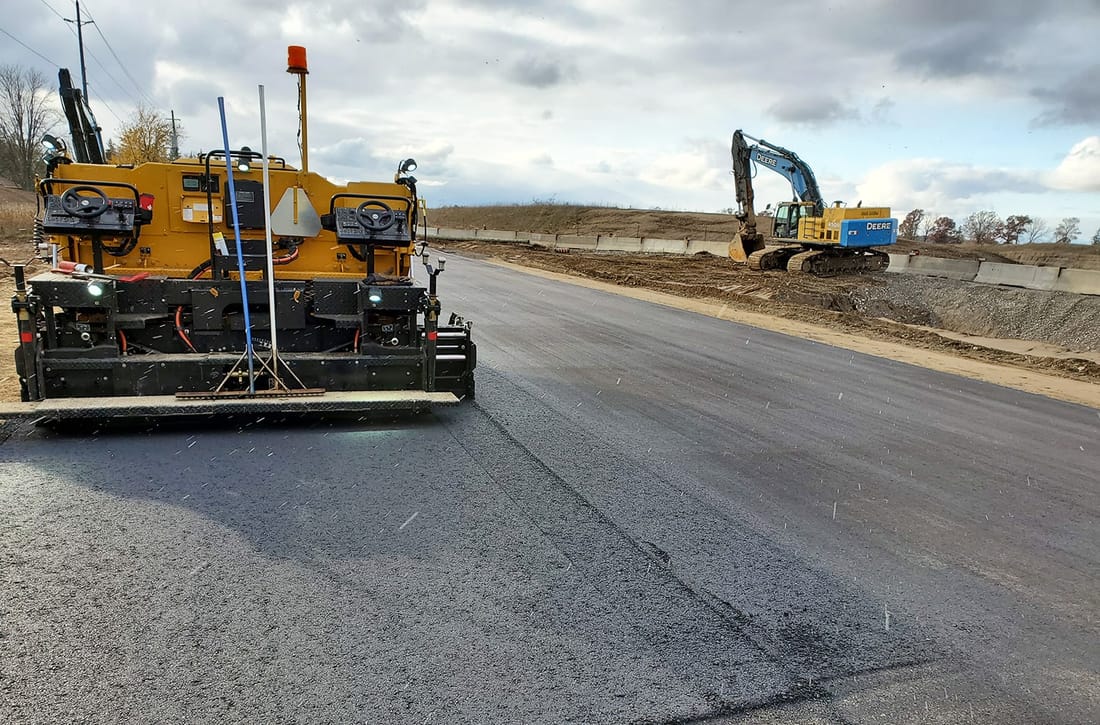
Our crews are equipped for road and municipal work, including mills, pavers with electronic screeds, steel and pneumatic rollers, and traffic control devices. We are used to working under city, county, and state specifications, so documentation, mix tickets, and inspection coordination are part of our standard process.
If you are a public works department, engineer, property manager, or private road owner in Memphis or the surrounding area, we can walk your project, review options, and provide a clear, line item estimate. You will see exactly what is included, from base repairs and thicknesses to mix types and traffic control, so you know what you are paying for and what performance to expect from your new pavement.